
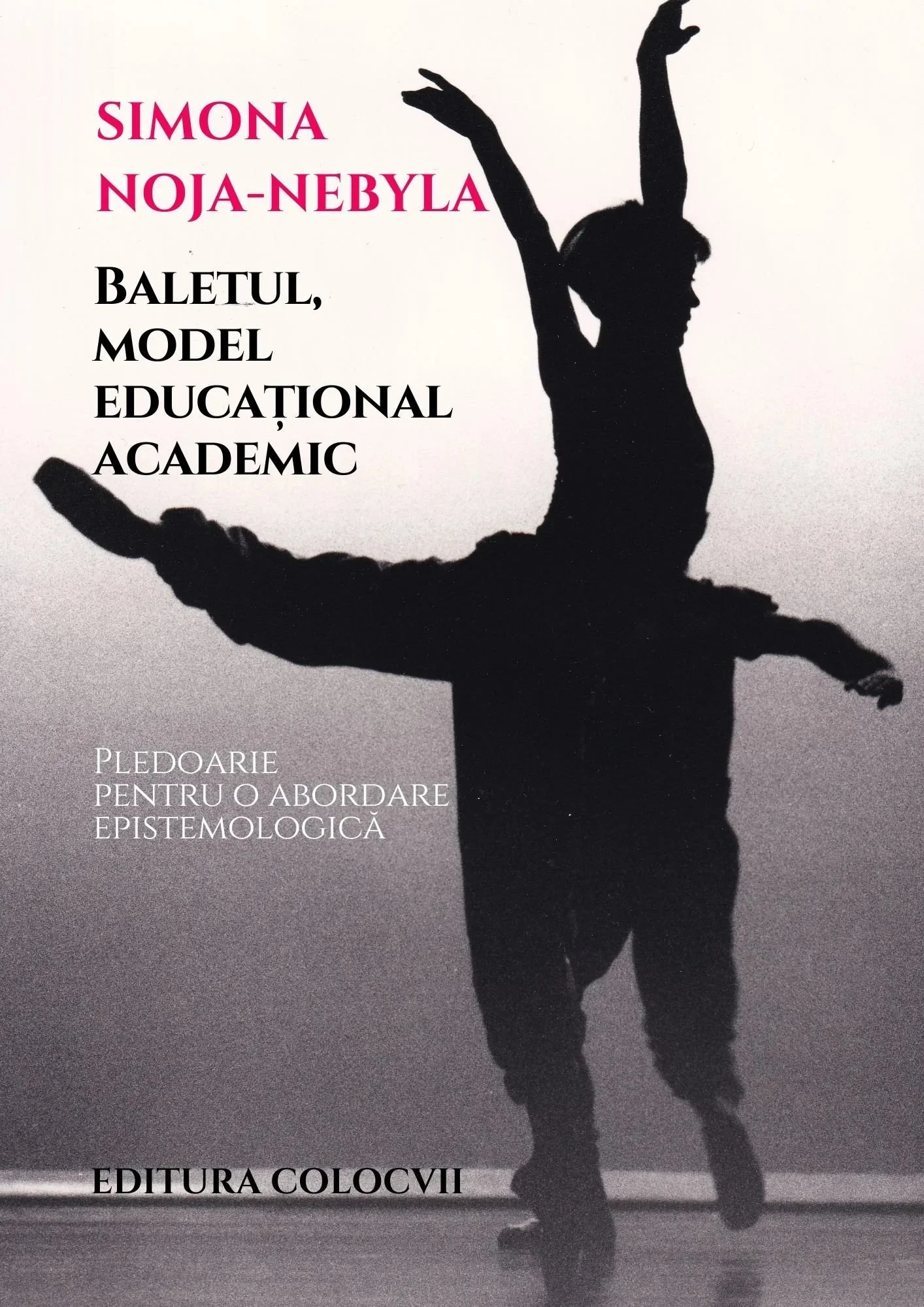
Baletul, model educațional academic. Pledoarie pentru o abordare epistemologică
Cartea cuprinde ideile centrale ale tezei de doctorat susținute public de autoare la 26 septembrie 2023, la Facultatea de Teatru și Film, Universitatea Babeș-Bolyai, Cluj-Napoca — distincția summa cum laude. Pornind de la o abordare epistemologică, lucrarea propune un model prin care baletul clasic, cu peste 360 de ani de tradiție, devine o disciplină academică autonomă, nu doar o artă transmisă direct de la maestru la elev. Conceptul central al cărții, matricea „balet continuum", leagă sistemul teoretic al baletului de cel fizic-practic, explicând cum gândirea estetică se întrupează în comportament și mișcare.
* Ediția tipărită, epuizată, rămâne piesa de colecție originală. Pentru că informația din ea contează mai mult decât formatul, am decis să pun cartea la dispoziția întregii comunități de balet, gratuit, în format digital.
Cui îi folosește și la ce, concret
Dacă predați — un vocabular teoretic pentru ce faceți deja din instinct. Puteți spune „cercetarea arată..." în fața părinților, colegilor sau conducerii școlii — și autoritatea dvs. profesională se simte altfel.
Dacă dansați sau studiați — primiți limbajul care lipsește adesea între ce știe corpul și ce poate explica mintea. Utilă mai ales dacă vă îndreptați spre predare, coregrafie sau cercetare.
Cartea completă e gratuită mai jos. Pentru cei care vor și discuție, nu doar lectură, am deschis și o serie săptămânală, pe capitole, într-o comunitate gratuită — [alătură-te aici → https://www.skool.com/catch-the-beam-to-your-dream-5337/about]
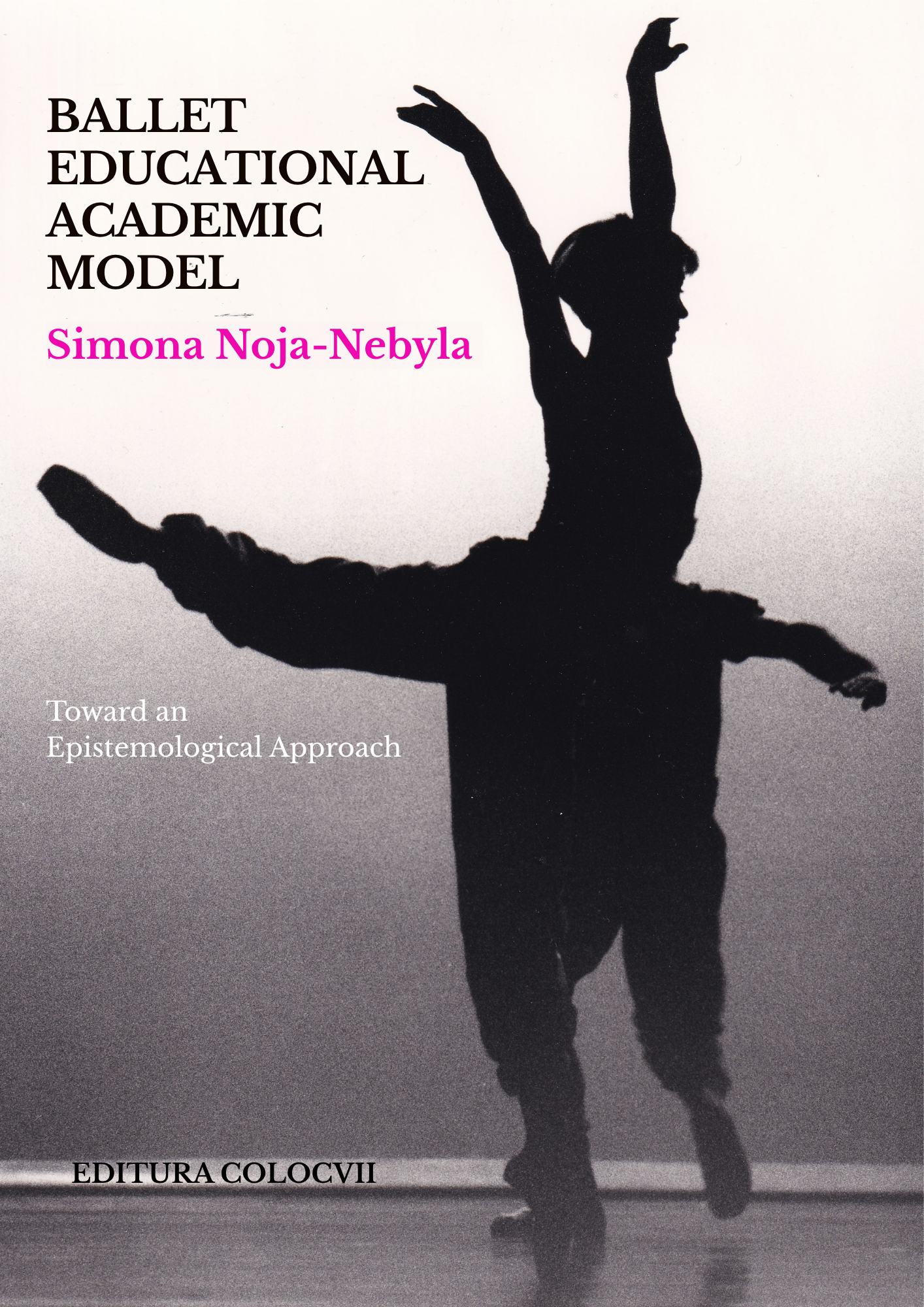
ENGLISH SUMMARY
Ballet as an Academic Educational Model. Toward an Epistemological Approach
Simona Noja-Nebyla, PhD (summa cum laude, 2023) Faculty of Theatre and Film, Babeș-Bolyai University, Cluj-Napoca
The full doctoral thesis (234 pages) was published in Romanian in 2024 (Editura Colocvii, Cluj-Napoca) and is available as a free digital edition. An English edition is planned but not yet available. This document distills its central ideas for readers who don't read Romanian — and helps us gauge interest in a full English translation.
The Central Question
Classical ballet has over 360 years of documented tradition — yet it has never been formally recognized as an autonomous academic discipline. It is still, overwhelmingly, taught as a craft transmitted directly from master to student, with no shared written theoretical foundation of its own. The thesis asks: what would it take for ballet to be treated as a discipline of knowledge in its own right, on equal footing with any other academic field?
The Core Argument
Today, a general dance diploma is often considered sufficient to teach and evaluate classical ballet. The thesis illustrates the resulting gap with a simple comparison: it is as though a general practitioner were allowed to practice as a dentist, without any specific training in that field. The distinct technical, anatomical, and pedagogical demands of classical ballet call for a distinct, rigorously defined body of theory — not general dance training applied by default.
The "Ballet Continuum" Matrix
The thesis's central theoretical contribution is a model called the ballet continuum — a matrix connecting ballet's conceptual-theoretical system to its physical-practical one. It maps how aesthetic thinking becomes embodied in movement and behavior, offering teachers a structured way to move between theory and practice, rather than treating them as separate worlds.
Empirical Foundation
The theoretical model is not built from literature alone. It draws directly on the Noja-Nebyla STAGE Education pilot project, which the author led in Vienna between 2020 and 2022, working with 24 students from eight countries. The thesis also engages the P.E.R.M.A. well-being model, applying it to the ballet class to connect technical rigor with the dancer's psychological health — linking performance and well-being rather than treating them as competing priorities.
A Telling Statistic
In the United States, an estimated 70% of professional ballet dancers hold a university degree — yet only about 1% go on to complete a doctorate. The thesis reads this gap as clear evidence of the distance between practice and academic recognition in the field, and argues that closing it benefits dancers, teachers, and the art form itself.
Implications for Teaching
— A shared theoretical vocabulary for describing what happens in a ballet class, not just prescribing steps.
— A framework for training ballet teachers with the same rigor applied to dancers' technical training.
— A basis for treating ballet pedagogy as a field of ongoing research, not a fixed inherited tradition.
— A closer integration of dancers' psychological well-being into technical training.
Conclusion
The thesis argues that, through this model, ballet training can form not only skilled technicians, but independent thinkers with artistic and social responsibility — dancers and teachers equipped with both embodied skill and theoretical understanding of their own discipline.
About the Author
Simona Noja-Nebyla danced as a principal ballerina for 21 years on major international stages, including the Vienna State Opera, and has taught for 20 years. She directed the Vienna State Opera Ballet Academy for 10 years. She founded the European Ballet Grand Prix competition (2017) and the Noja-Nebyla STAGE Education pilot project (2020–2022). In 2023, she completed her PhD summa cum laude on ballet as an academic educational model.
Interested in a full English edition? Let us know in the community — reader interest directly shapes whether and when a complete translation gets made.
Who this helps, and how
If you teach — you gain a theoretical vocabulary for what you already do by instinct. Being able to say "research shows..." changes how your expertise is received by parents, colleagues, and school directors.
If you dance or study — you get the language that often sits missing between what your body knows and what your mind can explain. Especially useful if you're moving toward teaching, choreography, or research.
The full book is free (see the registration beside) in Romanian
If you'd rather discuss it than just read it, I also run a free weekly chapter-by-chapter series in English in the SKOOL community — [join here → https://www.skool.com/catch-the-beam-to-your-dream-5337/about ]